
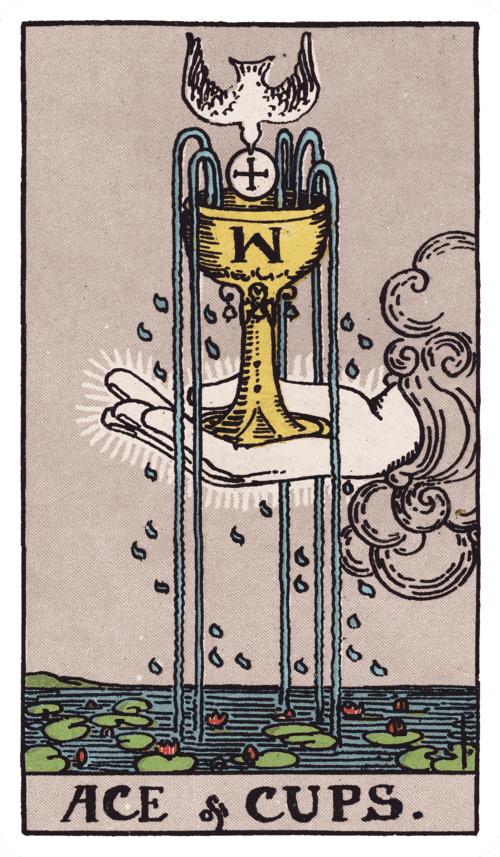
Cups · Minor Arcana
Ace of Cups
New emotional opening, overflow, gift of love and connection
Go deeper with Ace of Cups
The meanings below are a starting point. Bring what's actually on your mind and reflect on it here — what comes back is a question to sit with, never a forecast.
Reflection Room
Ace of Cups · upright
Write and save if you'd rather sit with it alone. Nothing is sent.
Ace of Cups Upright Meaning
The Ace of Cups invites you into a moment of pure emotional or relational potential — a chalice overflowing with possibility. This might arrive as a new feeling, a deepening of existing love, a moment of genuine connection, or the simple opening of your capacity to feel. The gift is offered. Whether you receive it is the question the card holds.
This card as a mirror: what emotional opening or relational possibility is trying to reach you right now — and what would it take to say yes to it?
Ace of Cups Reversed Meaning
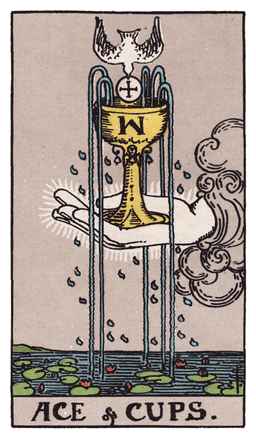
The Ace of Cups reversed often speaks to the closing of an emotional door — either protective (not all offers serve you) or painful (you're defending against hurt). You might be telling yourself you don't have room for more feeling, or that connection isn't safe. Sometimes this reversal is honest caution; sometimes it's protection that no longer serves.
This card as a mirror: what emotional closure is happening right now — and can you sense whether it's a boundary you need or a wound you're protecting?
The Ace of Cups in Love & Relationships
Upright
This card points to an emotional or relational opening: a new connection, a deepening of intimacy, or simply a moment when you're able to feel more openly than before. The question isn't whether this opening will lead somewhere. It's whether you can recognize it when it arrives, and whether you're willing to let yourself be moved by it.
Reversed
You may be protecting yourself from feeling right now, either because a past hurt is still fresh or because you've decided connection isn't safe. Not all emotional closures are wounds. Sometimes stepping back from availability is exactly what you need. The card asks you to notice which one this is.
The Ace of Cups in Work & Career
Upright
There's potential for genuine collaboration, creative flow, or work that feels connected to something you care about. This isn't about a promotion or a job offer. It's about a moment when your work might touch something real — whether that's a meaningful project, a good team dynamic, or your own sense of purpose in what you do.
Reversed
You may be withdrawing your enthusiasm or emotional investment in your work right now. This could be healthy boundary-setting if the work doesn't serve you. It could also be burnout or disappointment hardening into indifference. The distinction matters for what comes next.
Ace of Cups: Yes or No?
Leans toward yes — and the better question underneath is whether you're actually ready to receive what's being offered, or whether you're protecting something that still needs protecting.
Yes-or-no readings are the one place tarot pretends to be a fortune teller. We answer the question, then hand you the better one underneath it — that's the part worth your time.
Questions to ask when you draw Ace of Cups
- What specific feeling or connection is trying to reach you right now that you haven't fully acknowledged?
- What would it take for you to say yes to this opening without immediately bracing for it to disappear?
- If this emotional possibility is real, what part of you is most afraid of it?
Guides that talk about Ace of Cups
Cards near Ace of Cups
Next door in Cups
The other Aces
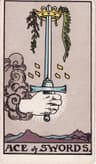
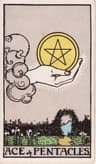
Shares its themes
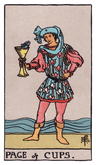
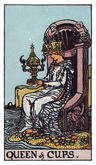
Ace of Cups Symbolism
Interpretive Traditions
Different schools of tarot bring different lenses to the Ace of Cups. These are perspectives, not contradictions.
Rider-Waite-Smith
Waite emphasised the Ace as the seed — the undifferentiated potential from which love and emotional connection grow. The overflowing quality suggests abundance, but also the simple purity of a gift offered without condition. The hand from heaven reinforces that this moment isn't earned; it's bestowed.
Thoth
Crowley's system ties the Ace of Cups to Neptune and the very source of emotional experience. It's not gentle sentimentality but the deep wellspring of feeling itself — the universal love from which all particular love flows. The Thoth image emphasises luminous depth over human sentimentality.
Modern Intuitive
Contemporary readers use the Ace of Cups as permission to feel, to open, to receive love as a legitimate gift rather than something to be earned. It's often drawn by people standing at the edge of new relationships or new self-love, and the card simply says: yes, say yes.
Ace of Cups Keywords & Themes
The Ace of Cups tarot card is associated with the following themes and keywords across upright and reversed positions: emotional opening, new love, connection, overflow, receptivity, gift, emotional closure, defensive, blocked feeling, heartguard, fear of connection. Its elemental correspondence is Water.
Whether you drew the Ace of Cups in a daily pull, a weekly spread, or a year-ahead reading, its core invitation is the same: to look honestly at what this card is reflecting in your own life. Tarot Digest uses the Ace of Cups — and all 78 cards — as mirrors for self-inquiry, not prediction.
Recommended Decks & Books
Whether you're just starting with tarot or deepening a long practice, these are the decks and books most worth your time.
- 🃏
The Original Rider Waite Smith Tarot — A.E. Waite & Pamela Coleman Smith
The deck that defined modern tarot. First published in 1909, the RWS introduced illustrated pip cards for all 78 positions — a breakthrough that made tarot accessible to everyone. Every major deck since is either an homage or a reaction to it.
- 📖
Seventy-Eight Degrees of Wisdom — Rachel Pollack
The definitive companion to tarot, first published in 1980 and still the best single-volume guide. Pollack reads the cards as a living psychological system — the Major Arcana as a map of consciousness, the Minor as the terrain of daily life.
- 📖
The Creative Tarot — Jessa Crispin
A guide to using tarot as a tool for creative practice rather than divination — written for writers, artists, and makers. Crispin brings a sharp literary sensibility and treats the cards as a language for thinking about creative process.
- 🃏
Modern Witch Tarot Deck — Lisa Sterle
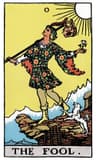
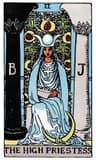
The RWS structure reimagined with diverse, contemporary figures in modern settings. Every symbol from the original is preserved (the Fool still stands at the cliff edge, the High Priestess still flanked by pillars), but the world looks like ours.
Links above may earn a small commission at no cost to you — affiliate code tarotdigest-20. Disclosure