
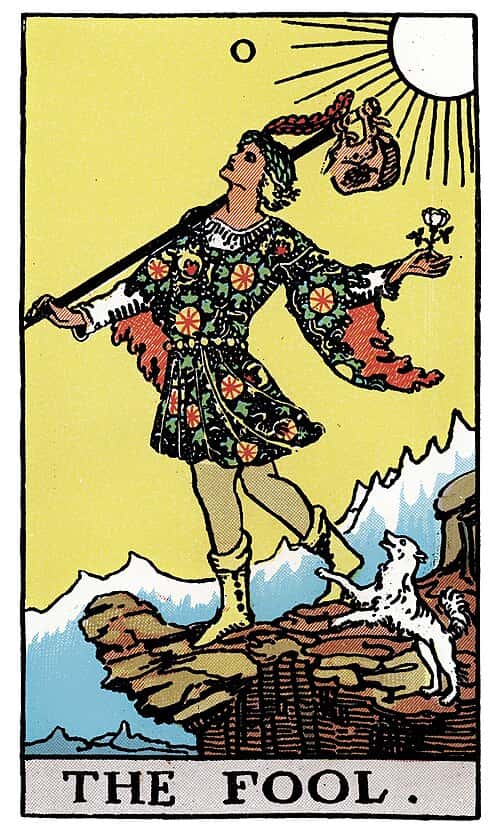
0 — The Fool · Major Arcana
The Fool
New beginnings, leap of faith, unlimited potential
Go deeper with The Fool
The meanings below are a starting point. Bring what's actually on your mind and reflect on it here — what comes back is a question to sit with, never a forecast.
Reflection Room
The Fool · upright
Write and save if you'd rather sit with it alone. Nothing is sent.
The Fool Upright Meaning
The Fool invites you into the energy of pure beginning — that rare, open moment before expectation and experience have shaped what feels possible. This card isn't about being naive; it's about being willing. Something in your life is asking for a fresh approach, an honest start, or a step taken before all the conditions are perfectly met.
This card as a mirror: where in your life right now is something genuinely new trying to begin — and what would it feel like to meet it with curiosity instead of caution?
The Fool Reversed Meaning
The Fool reversed often surfaces when fear has found a convincing costume. You might be telling yourself you need more preparation, better timing, or more certainty — and some of that may be true. But it's worth sitting honestly with whether caution is serving you or simply keeping you comfortable. Occasionally this card reversed points the other direction: movement without enough grounding, momentum that's outpacing your own awareness.
This card as a mirror: what story are you telling yourself about why now isn't the right time — and how much of that story do you actually believe?
The Fool in Love & Relationships
Upright
You're being invited to show up as yourself rather than as a version of yourself you think will work. In a new relationship, this means speaking first truths early. In an established one, it means risking something small that feels vulnerable — a real conversation, a genuine ask, something you've rehearsed in your head but never said aloud.
Reversed
You're waiting for permission or perfect conditions that may never arrive. The question isn't whether the other person is right, or whether timing is ideal — it's whether you're using those legitimate uncertainties as a way to avoid the risk of being seen. Sometimes the caution is wise. Sometimes it's just safety.
The Fool in Work & Career
Upright
Something new is knocking: a project, a skill, a different kind of work, or simply a different way of approaching what you already do. This card asks whether you're willing to begin before you feel fully ready, knowing that experience will teach you what preparation alone cannot. The readiness question is worth asking, but so is the willingness one.
Reversed
You may be caught between two pressures: either you're holding back from a move that fits because it feels risky, or you're moving forward without checking in with whether it's actually what you want. Look at what 'not ready' means in your specific situation — does it name a real skill gap, or does it name anxiety? And if you are moving, are you moving toward something or just away from discomfort?
The Fool: Yes or No?
Leans toward yes — and the better question underneath is: am I willing to begin before I feel completely ready, and do I know the difference between caution that's wise and fear that's habit?
Yes-or-no readings are the one place tarot pretends to be a fortune teller. We answer the question, then hand you the better one underneath it — that's the part worth your time.
Questions to ask when you draw The Fool
- What would it feel like to approach this situation as a genuine beginning rather than something you need to control or predict?
- If you removed the requirement for perfect timing or complete readiness, what would become possible?
- Where are you waiting for permission or certainty that only experience itself can give you?
Guides that talk about The Fool
Cards near The Fool
Beside it on the Fool's Journey
Shares its themes
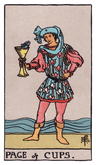
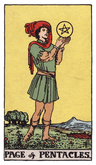
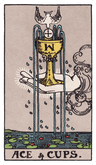
The Fool Symbolism
Interpretive Traditions
Different schools of tarot bring different lenses to The Fool. These are perspectives, not contradictions.
Rider-Waite-Smith
Arthur Edward Waite described The Fool as the soul before incarnation — pure spirit on the threshold of experience. He placed it at zero deliberately: outside the numbered sequence, belonging to no fixed place in the journey, and therefore always present. The cliff is not recklessness; it's the edge of the known world.
Thoth
In Crowley's system, The Fool is Aleph — the first letter of the Hebrew alphabet, associated with Air and the boundless, formless divine. Lady Frieda Harris's illustration emphasises chaotic creative energy over naive innocence. This Fool is closer to the divine trickster or the holy fool of mystical tradition: someone whose apparent madness conceals a deeper wisdom.
Modern Intuitive
Contemporary readers often frame The Fool as permission — permission to not have it figured out, to begin before you're ready, to value the aliveness of trying over the safety of not failing. Rachel Pollack described it as 'the card of absolute freedom,' and noted that freedom always looks a little reckless from the outside.
Campbell parallel
The Call to Adventure
In your life
The Fool appears when something genuinely new is possible — not a variation on what came before, but a real beginning. It doesn't ask whether you're ready, because readiness is often just fear wearing sensible clothes. It asks instead: what would you do if you trusted that the ground would rise to meet you?
The Fool Keywords & Themes
The Fool tarot card is associated with the following themes and keywords across upright and reversed positions: new beginnings, trust, openness, stepping into the unknown, curiosity, fear, avoidance, recklessness, being stuck at a threshold, self-deception. Its elemental correspondence is Air. Its planetary ruler is Uranus.
Whether you drew The Fool in a daily pull, a weekly spread, or a year-ahead reading, its core invitation is the same: to look honestly at what this card is reflecting in your own life. Tarot Digest uses The Fool — and all 78 cards — as mirrors for self-inquiry, not prediction.
Recommended Decks & Books
Whether you're just starting with tarot or deepening a long practice, these are the decks and books most worth your time.
- 🃏
The Original Rider Waite Smith Tarot — A.E. Waite & Pamela Coleman Smith
The deck that defined modern tarot. First published in 1909, the RWS introduced illustrated pip cards for all 78 positions — a breakthrough that made tarot accessible to everyone. Every major deck since is either an homage or a reaction to it.
- 📖
Seventy-Eight Degrees of Wisdom — Rachel Pollack
The definitive companion to tarot, first published in 1980 and still the best single-volume guide. Pollack reads the cards as a living psychological system — the Major Arcana as a map of consciousness, the Minor as the terrain of daily life.
- 📖
The Creative Tarot — Jessa Crispin
A guide to using tarot as a tool for creative practice rather than divination — written for writers, artists, and makers. Crispin brings a sharp literary sensibility and treats the cards as a language for thinking about creative process.
- 🃏
Modern Witch Tarot Deck — Lisa Sterle
The RWS structure reimagined with diverse, contemporary figures in modern settings. Every symbol from the original is preserved (the Fool still stands at the cliff edge, the High Priestess still flanked by pillars), but the world looks like ours.
Links above may earn a small commission at no cost to you — affiliate code tarotdigest-20. Disclosure