
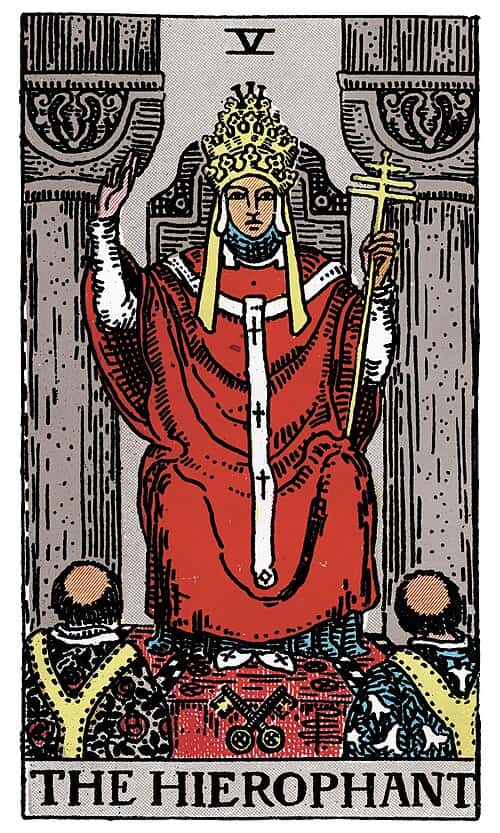
V · Major Arcana
The Hierophant
Tradition, teaching, spiritual wisdom, community, ritual
Also known as
Marseille / Historical: The Pope — Older European decks used 'The Pope' for this card. Waite renamed it to 'The Hierophant' (Greek for 'one who reveals sacred things') to move away from Catholic specificity toward a more universal symbol of spiritual tradition.
Some modern decks: The High Priest — A number of contemporary decks use 'The High Priest' as a gender-neutral alternative that preserves the spiritual authority archetype.
Go deeper with The Hierophant
The meanings below are a starting point. Bring what's actually on your mind and reflect on it here — what comes back is a question to sit with, never a forecast.
Reflection Room
The Hierophant · upright
Write and save if you'd rather sit with it alone. Nothing is sent.
The Hierophant Upright Meaning
The Hierophant invites you to tap into the wisdom that has already been gathered — by teachers, by traditions, by communities of practice. This card isn't about blind acceptance; it's about the humility to learn from what came before. Rituals, structures, and inherited knowledge exist for a reason. The question is whether you're engaging with them consciously or just because 'that's how it's done.'
This card as a mirror: where have traditions or teachings genuinely shaped who you are — and where have you accepted a framework without examining it?
The Hierophant Reversed Meaning
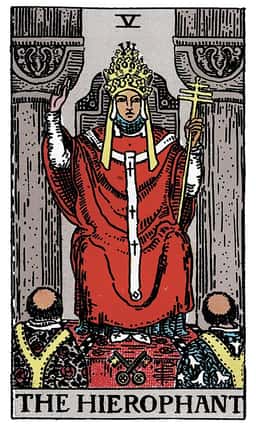
The Hierophant reversed often points to conflict with institutional authority or an overcorrection against tradition. You might be rebelling for its own sake, or you might have discovered that a framework you've been living within doesn't actually serve you. Sometimes this reversal surfaces the original question: have you internalised someone else's beliefs so deeply that you've forgotten to ask your own questions?
This card as a mirror: what beliefs or traditions have you accepted without examining — and what would it feel like to think for yourself?
The Hierophant in Love & Relationships
Upright
This card asks whether you're conscious about the frameworks you bring to relationships — shared values, how conflict works, what commitment means. You may have inherited these from family, culture, or past partners. The question isn't whether to follow them, but whether you've examined them enough to know if they're actually yours.
Reversed
You might be pushing back against a relational pattern or expectation that no longer fits, or you're discovering that a belief you accepted about love (how a partner should behave, what you should want) was never really examined. The friction here is real information — it's telling you something needs to shift in how you think about this relationship.
The Hierophant in Work & Career
Upright
You're working within a system, hierarchy, or set of professional norms. This card invites you to ask: are you following these structures because they serve your actual work, or because you haven't questioned whether there's another way? Mentorship and learning from experience matter here, but so does knowing why you're doing things the way you are.
Reversed
You may be in conflict with authority or the way things are supposed to be done, either because the system genuinely doesn't work or because you're rebelling without a clearer vision of what you want instead. Sometimes this reversal is necessary friction; sometimes it's a sign you've adopted someone else's rebellion and need to figure out what you actually believe about your work.
The Hierophant: Yes or No?
Leans toward yes — and the better question underneath is: are you saying yes to something because it aligns with what you actually value, or because it's the expected answer?
Yes-or-no readings are the one place tarot pretends to be a fortune teller. We answer the question, then hand you the better one underneath it — that's the part worth your time.
Questions to ask when you draw The Hierophant
- What teaching or framework have you accepted without ever questioning whether it works for your life?
- Where do you feel the pull between respecting how things are traditionally done and wanting to do them differently?
- If you removed the layer of 'this is how it's supposed to be,' what would you actually choose in this situation?
Cards near The Hierophant
Beside it on the Fool's Journey
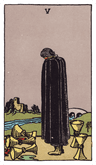
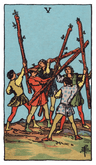
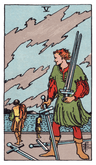
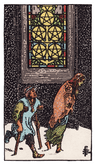
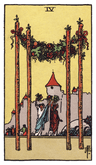
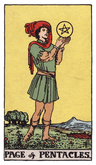
Shares its number: the Fives
Shares its themes
The Hierophant Symbolism
Interpretive Traditions
Different schools of tarot bring different lenses to The Hierophant. These are perspectives, not contradictions.
Rider-Waite-Smith
Waite's Hierophant is the bridge between the human and the sacred — a figure who respects tradition not out of rigidity but because tradition carries accumulated wisdom. He represents the best of institutional authority: learning, mentorship, and the careful transmission of meaning.
Thoth
Crowley's Hierophant (The Priest) represents the principle of communication and teaching — Mercury's role in making the abstract accessible. More focused on the active transmission of knowledge than on deference to authority.
Modern Intuitive
Contemporary readers often frame the Hierophant as a more complex card — validating both the value of tradition and the need to question it. Many modern readers are reclaiming this card as permission to draw on ancestral and spiritual wisdom while maintaining critical thinking.
Campbell parallel
The Road of Trials — encounter with tradition and collective meaning
In your life
The Hierophant appears when you're being invited into community, tradition, or teaching — or when you're called to examine whether you've accepted someone else's framework without checking if it truly fits. This card asks: what inherited wisdom truly serves you, and where have you stopped thinking for yourself?
The Hierophant Keywords & Themes
The Hierophant tarot card is associated with the following themes and keywords across upright and reversed positions: tradition, wisdom, teaching, community, ritual, learning, blind conformity, rigid orthodoxy, questioning authority, breaking rules, lack of boundaries. Its elemental correspondence is Earth. Astrologically it is linked to Taurus. Its planetary ruler is Venus.
Whether you drew The Hierophant in a daily pull, a weekly spread, or a year-ahead reading, its core invitation is the same: to look honestly at what this card is reflecting in your own life. Tarot Digest uses The Hierophant — and all 78 cards — as mirrors for self-inquiry, not prediction.
Recommended Decks & Books
Whether you're just starting with tarot or deepening a long practice, these are the decks and books most worth your time.
- 🃏
The Original Rider Waite Smith Tarot — A.E. Waite & Pamela Coleman Smith
The deck that defined modern tarot. First published in 1909, the RWS introduced illustrated pip cards for all 78 positions — a breakthrough that made tarot accessible to everyone. Every major deck since is either an homage or a reaction to it.
- 📖
Seventy-Eight Degrees of Wisdom — Rachel Pollack
The definitive companion to tarot, first published in 1980 and still the best single-volume guide. Pollack reads the cards as a living psychological system — the Major Arcana as a map of consciousness, the Minor as the terrain of daily life.
- 📖
The Creative Tarot — Jessa Crispin
A guide to using tarot as a tool for creative practice rather than divination — written for writers, artists, and makers. Crispin brings a sharp literary sensibility and treats the cards as a language for thinking about creative process.
- 🃏
Modern Witch Tarot Deck — Lisa Sterle
The RWS structure reimagined with diverse, contemporary figures in modern settings. Every symbol from the original is preserved (the Fool still stands at the cliff edge, the High Priestess still flanked by pillars), but the world looks like ours.
Links above may earn a small commission at no cost to you — affiliate code tarotdigest-20. Disclosure