
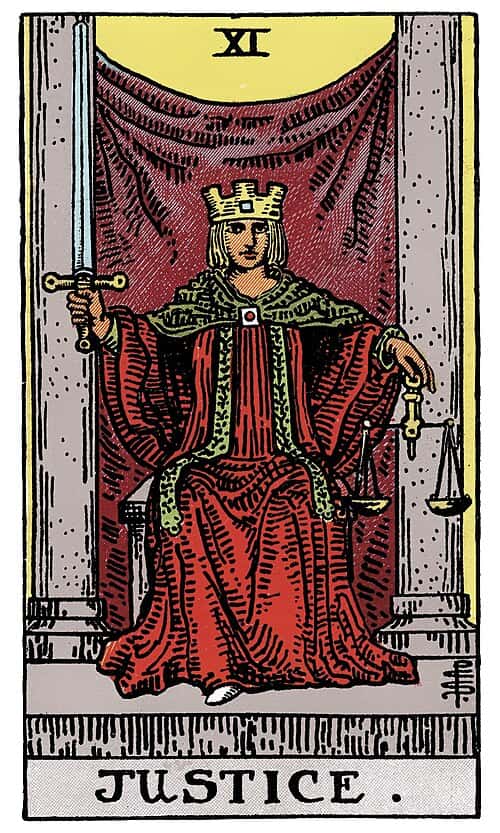
XI · Arcanos Mayores
Justicia
Equilibrio, responsabilidad, honestidad, ver con claridad, causa y efecto
También conocida como
Thoth: Adjustment — Crowley renamed Justice to 'Adjustment' — emphasising active recalibration rather than passive weighing. The energy is similar; the framing is subtly more dynamic.
Marseille numbering: Justice (VIII) — In the Marseille tradition, Justice is card VIII and Strength is XI. Waite swapped these. If you see Justice labelled as VIII in a book, it's using the older numbering convention.
Profundiza con Justicia
Los significados de abajo son un punto de partida. Trae lo que de verdad tienes en mente y reflexiona aquí — lo que vuelve es una pregunta para sentarte con ella, nunca un pronóstico.
Reflection Room
Justicia · upright
Write and save if you'd rather sit with it alone. Nothing is sent.
Justicia: significado al derecho
Justicia te invita a practicar la autorreflexión honesta, no la clase punitiva que espiral en vergüenza, sino la clase de ojos abiertos que crea la posibilidad del cambio. Esta carta pregunta: ¿qué acciones tienen consecuencias? ¿Qué has hecho que necesita ser reconocido? ¿Qué has dejado sin hacer? Pero también sostiene misericordia: las balanzas de Justicia no están destinadas a aplastarte con culpa. Están destinadas a mostrarte la verdad para que puedas elegir diferente de aquí en adelante. Justicia también se trata de recibir: ¿te estás permitiendo reclamar las buenas consecuencias de tus acciones, o solo te quedas en las difíciles?
Esta carta como espejo: ¿dónde estás evitando un reconocimiento honesto de algo (un patrón, una elección, un impacto), y cómo se sentiría traer claridad en lugar de juicio?
Justicia: significado invertido
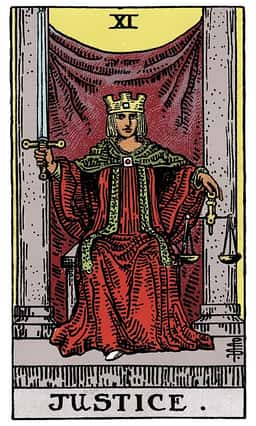
Justicia invertida aparece a menudo cuando estás en el autoengaño, diciéndote una historia sobre una situación que no se alinea con lo que realmente sabes. Puede señalar la evasión de la responsabilidad, la forma en que a veces sostenemos a otros a estándares que no nos sostenemos a nosotros mismos, o viceversa. También puede surgir cuando estás experimentando injusticia (ya sea de otros o de ti mismo) y las balanzas se sienten gravemente inclinadas. La inversión puede significar que no estés dispuesto a ver tu propio papel en algo, o que te estés culpando excesivamente por cosas genuinamente fuera de tu control.
Esta carta como espejo: ¿qué historia te estás contando que no se alinea del todo con lo que realmente sabes, y qué requeriría ver con honestidad?
Justicia en el amor y las relaciones
Al derecho
Justicia pregunta qué has sido honesto en tu relación y qué has pasado por alto. Esto podría significar reconocer cómo tus acciones impactan al otro, o reconocer la buena fe que ambos han mostrado. La carta te invita a mirar si las balanzas entre ustedes se sienten equilibradas, o si algo necesita ser nombrado.
Invertida
Podrías estarte contando una historia sobre la relación que no coincide con lo que realmente ves, excusando comportamiento que no tolerarías de nadie más, o culpándote excesivamente por problemas que pertenecen a ambos. Justicia invertida pregunta: ¿qué verías si dejaras de protegerte (o al otro) con una narrativa cómoda?
Justicia en el trabajo y la carrera
Al derecho
Esta carta señala la responsabilidad en tu trabajo: ¿qué has hecho bien que no te atribuyes, y qué has evitado asumir? Justicia también pregunta si el esfuerzo que pones coincide con el reconocimiento que recibes, o si necesitas recalibrar expectativas, ya sea haciendo el trabajo o pidiendo lo que es justo.
Invertida
Podrías estar atrapado en un doble estándar, sosteniéndote a ti mismo a estándares punitivos mientras dejas que otros se salgan fácilmente, o viceversa. Esta carta también puede surgir cuando te culpas a ti mismo por problemas sistémicos, o cuando reescribes tu papel en un conflicto laboral para proteger tu imagen. La inversión pregunta: ¿dónde estás evitando la imagen real?
Justicia: ¿sí o no?
Se inclina hacia sí, y la pregunta mejor debajo es: ¿qué estás realmente listo para ser honesto?
Las lecturas de sí o no son el único lugar donde el tarot juega a ser adivino. Respondemos la pregunta y luego te entregamos la mejor pregunta que hay debajo — esa es la parte que vale tu tiempo.
Preguntas para cuando saques Justicia
- ¿Qué has hecho que no has reconocido completamente, ni siquiera a ti mismo?
- ¿Dónde sostienes a otros responsables de maneras que no te sostienes a ti mismo, o viceversa?
- ¿Qué cambiaría si dejara de defender tu versión de esta situación y mirara lo que realmente pasó?
Cartas cercanas a Justicia
A su lado en el viaje del Loco
Comparte su número: los Dos
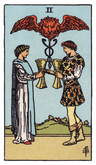
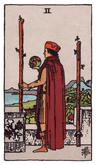
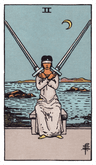
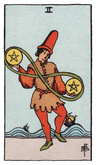
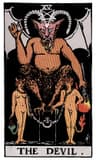
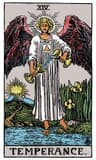
Simbolismo de Justicia
Tradiciones interpretativas
Distintas escuelas del tarot miran Justicia con distintos lentes. Son perspectivas, no contradicciones.
Rider-Waite-Smith
La Justicia de Waite es deliberadamente serena e imparcial. No está enojada, no es vengativa, no es compasiva. Está viendo con claridad. Esta es la justicia del karma, no el castigo sino la relación inevitable entre acción y consecuencia, sostenida en equilibrio.
Thoth
Crowley colocó Justicia en la posición 11 (mientras movía Fuerza a 8) y la asoció con Libra y el elemento aire. La versión Thoth enfatiza la claridad intelectual requerida para ver situaciones sin prejuicio personal, la capacidad de pensar justamente sobre lo que es verdad.
Intuitivo moderno
Los lectores contemporáneos a menudo enfatizan las dimensiones psicológicas: Justicia como la capacidad de autorreflexión honesta, la disposición a ver tus puntos ciegos, el sostén compasivo de la responsabilidad. Esta carta se convierte menos en juicio externo y más en el testigo interno que sabe cuándo estás siendo honesto contigo mismo.
Paralelo con Campbell
El Camino de las Pruebas: responsabilidad y reconocimiento honesto
En tu vida
Esta carta aparece cuando algo te pide que veas con claridad, no para juzgarte duramente, sino para mirar honestamente lo que es verdad. Puede señalar una situación donde la causa y el efecto se hacen visibles, o donde se te llama a responder por algo que has hecho o dejado de hacer. Pero la invitación más profunda de Justicia es esta: ¿puedes traer la misma equidad a ti mismo que extenderías a alguien que amas? ¿Dónde has sido duro contigo de una manera en que nunca serías duro con otro?
Palabras clave y temas de Justicia
La carta Justicia está asociada con los siguientes temas y palabras clave, al derecho y en posición invertida: honestidad, responsabilidad, claridad, perspectiva equilibrada, causa y consecuencia, autorreflexión, autoengaño, evasión, culpa, desequilibrio, negación, perspectiva distorsionada. Su correspondencia elemental es Aire. Astrológicamente se vincula con Libra. Su regente planetario es Venus.
Da igual si sacaste Justicia en una tirada diaria, semanal o del año por delante: su invitación de fondo es la misma, mirar con honestidad qué refleja esta carta en tu propia vida. Tarot Digest usa Justicia — y las 78 cartas — como espejos para la autoindagación, no para la predicción.
Barajas y libros recomendados
Tanto si estás empezando con el tarot como si llevas años de práctica, estas son las barajas y los libros que más valen tu tiempo.
- 🃏
The Original Rider Waite Smith Tarot — A.E. Waite & Pamela Coleman Smith
The deck that defined modern tarot. First published in 1909, the RWS introduced illustrated pip cards for all 78 positions — a breakthrough that made tarot accessible to everyone. Every major deck since is either an homage or a reaction to it.
- 📖
Seventy-Eight Degrees of Wisdom — Rachel Pollack
The definitive companion to tarot, first published in 1980 and still the best single-volume guide. Pollack reads the cards as a living psychological system — the Major Arcana as a map of consciousness, the Minor as the terrain of daily life.
- 📖
The Creative Tarot — Jessa Crispin
A guide to using tarot as a tool for creative practice rather than divination — written for writers, artists, and makers. Crispin brings a sharp literary sensibility and treats the cards as a language for thinking about creative process.
- 🃏
Modern Witch Tarot Deck — Lisa Sterle
The RWS structure reimagined with diverse, contemporary figures in modern settings. Every symbol from the original is preserved (the Fool still stands at the cliff edge, the High Priestess still flanked by pillars), but the world looks like ours.
Los enlaces de arriba pueden generar una pequeña comisión sin costo para ti — código de afiliado tarotdigest-20. Divulgación