
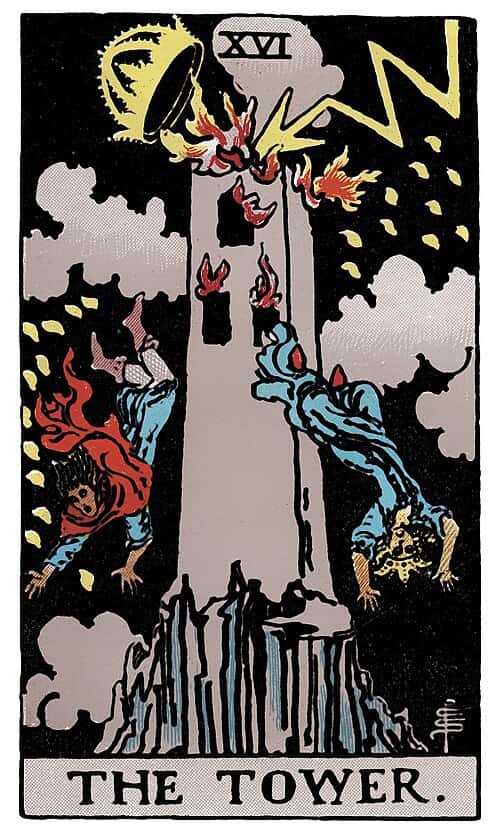
XVI · Arcanos Mayores
La Torre
Disrupción súbita, colapso, convulsión, ajuste de cuentas necesario
Profundiza con La Torre
Los significados de abajo son un punto de partida. Trae lo que de verdad tienes en mente y reflexiona aquí — lo que vuelve es una pregunta para sentarte con ella, nunca un pronóstico.
Reflection Room
La Torre · upright
Write and save if you'd rather sit with it alone. Nothing is sent.
La Torre: significado al derecho
Esta carta te invita a enfrentar un momento de cambio súbito y devastador, algo que creías sólido se desmorona. La Torre no es castigo; es una limpieza. Lo que destruye no te servía, aunque no lo supieras todavía. La carta no pregunta si esto está sucediendo, sino qué harás con lo que viene después. A veces esta carta aparece para nombrar una disrupción que ya ocurrió y te pide que finalmente la mires de frente.
Esta carta como espejo: ¿dónde en tu vida algo que se sentía sólido ha estado desmoronándose en realidad, y qué si su colapso te pide construir algo más verdadero?
La Torre: significado invertido
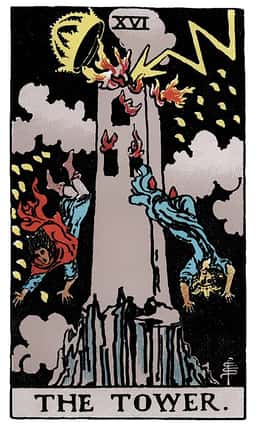
La Torre invertida puede señalar una disrupción que se está evitando, algo inestable que aún no cede pero muestra grietas. También podría sugerir un ajuste de cuentas interno, una disolución lenta de una creencia o identidad que no requiere colapso externo. A veces esta carta indica que te estás moviendo en el después de un momento Torre, con integración sucediendo más gentilmente que el golpe inicial.
Esta carta como espejo: ¿qué ves agrietarse en tiempo real, y estás construyendo hacia su colapso o hacia su transformación?
La Torre en el amor y las relaciones
Al derecho
Mira qué en tu relación ha sido inestable más tiempo del que admitiste, la dinámica que ahora te fuerza a un ajuste de cuentas. La Torre aquí te pregunta si has estado protegiendo algo que dejó de funcionar, y qué se vuelve posible una vez que dejas de hacerlo.
Invertida
Sientes grietas en algo que no estás listo para nombrar todavía, o estás en el aftermath a cámara lenta de una ruptura, aprendiendo a vivir diferente. Esta carta sugiere el trabajo de integración: la relación está cambiando, pero no necesariamente terminando. La pregunta es si estás resistiendo el cambio o enfrentándolo.
La Torre en el trabajo y la carrera
Al derecho
Un trabajo, rol o identidad profesional en que confiabas se está desmoronando, o ya se derrumbó y apenas ahora lo enfrentas. La Torre pregunta qué construyes después, no si la pérdida es real. ¿Qué protegía esta estructura de que vieras lo que realmente quieres?
Invertida
Tu situación de trabajo es inestable y lo sabes, pero el colapso no ha llegado todavía. Podrías estar en la incomodidad de ver algo fallar en cámara lenta, o estás ajustándote a un cambio reciente que aún se asienta. Nota dónde estás resistiendo lo inevitable y dónde ya estás adaptándote.
La Torre: ¿sí o no?
Se inclina hacia no, y la mejor pregunta debajo es si estás haciendo la pregunta correcta. La Torre no se ocupa de síes; se ocupa de qué necesita quebrarse para que algo más verdadero exista.
Las lecturas de sí o no son el único lugar donde el tarot juega a ser adivino. Respondemos la pregunta y luego te entregamos la mejor pregunta que hay debajo — esa es la parte que vale tu tiempo.
Preguntas para cuando saques La Torre
- ¿Qué has estado defendiendo que dejó de servirte hace mucho tiempo?
- Si este colapso ya está sucediendo, ¿qué evitas enfrentar sobre él?
- ¿Qué podrías construir en el espacio que esta limpieza crea?
Guías que hablan de La Torre
Cartas cercanas a La Torre
A su lado en el viaje del Loco
Comparte su número: los Siete
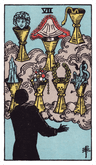
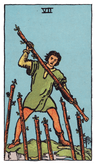
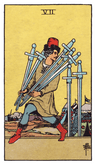
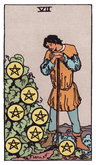
Comparte sus temas
Simbolismo de La Torre
Tradiciones interpretativas
Distintas escuelas del tarot miran La Torre con distintos lentes. Son perspectivas, no contradicciones.
Rider-Waite-Smith
Waite describió la Torre como 'la carta de la ruina rápida', pero críticamente, nunca tuvo la intención de que fuera puramente destructiva. Vio que era el necesario desmoronamiento de estructuras falsas, la iluminación súbita que barre la mentira cómoda. El rayo es la verdad hecha visible.
Thoth
En el sistema de Crowley, la Torre es Marte, la fuerza cruda e imparable que corta a través de la ilusión. Crowley la llamó 'el soplo del Espíritu Santo'. La destrucción no es mala sino necesaria, la limpieza del terreno para nuevo crecimiento. La ilustración de Frieda Harris enfatiza la escala cósmica de la disrupción.
Intuitiva Moderna
Los lectores contemporáneos enmarcan la Torre no como mala suerte sino como un llamado de atención, el momento cuando el universo finalmente dice 'no más'. Muchos intérpretes modernos enfatizan la liberación disponible después de la caída, y la manera en que la disrupción súbita, aunque dolorosa, es a menudo más amable que el lento deterioro de quedarse en algo falso.
Paralelo con Campbell
La Caverna Más Profunda: la prueba, el quiebre
En tu vida
La Torre no pide permiso. No espera a que estés listo. Aparece cuando algo sobre lo que construiste tu vida, una creencia, una relación, una identidad, una forma de trabajar, se construyó sobre un cimiento defectuoso y ya no puede mantenerse. El dolor es real. Pero te está señalando algo que necesitaba cambiar.
Palabras clave y temas de La Torre
La carta La Torre está asociada con los siguientes temas y palabras clave, al derecho y en posición invertida: disrupción, colapso, ajuste de cuentas necesario, lo que no puede sostenerse, limpieza, avance, ajuste de cuentas retrasado, transformación interna, revelación lenta de grietas, integración, reconstrucción. Su correspondencia elemental es Fuego. Su regente planetario es Marte.
Da igual si sacaste La Torre en una tirada diaria, semanal o del año por delante: su invitación de fondo es la misma, mirar con honestidad qué refleja esta carta en tu propia vida. Tarot Digest usa La Torre — y las 78 cartas — como espejos para la autoindagación, no para la predicción.
Barajas y libros recomendados
Tanto si estás empezando con el tarot como si llevas años de práctica, estas son las barajas y los libros que más valen tu tiempo.
- 🃏
The Original Rider Waite Smith Tarot — A.E. Waite & Pamela Coleman Smith
The deck that defined modern tarot. First published in 1909, the RWS introduced illustrated pip cards for all 78 positions — a breakthrough that made tarot accessible to everyone. Every major deck since is either an homage or a reaction to it.
- 📖
Seventy-Eight Degrees of Wisdom — Rachel Pollack
The definitive companion to tarot, first published in 1980 and still the best single-volume guide. Pollack reads the cards as a living psychological system — the Major Arcana as a map of consciousness, the Minor as the terrain of daily life.
- 📖
The Creative Tarot — Jessa Crispin
A guide to using tarot as a tool for creative practice rather than divination — written for writers, artists, and makers. Crispin brings a sharp literary sensibility and treats the cards as a language for thinking about creative process.
- 🃏
Modern Witch Tarot Deck — Lisa Sterle
The RWS structure reimagined with diverse, contemporary figures in modern settings. Every symbol from the original is preserved (the Fool still stands at the cliff edge, the High Priestess still flanked by pillars), but the world looks like ours.
Los enlaces de arriba pueden generar una pequeña comisión sin costo para ti — código de afiliado tarotdigest-20. Divulgación