Los 56 arcanos Menores parecen muchas cosas que aprender hasta que te das cuenta de que son cuatro historias cortas contadas cuatro veces. Cada palo va del As al Diez y luego sus cuatro cartas de corte, y cada palo trata sobre un tipo de experiencia humana. Si clarificas los cuatro temas, las cartas individuales dejan de ser 56 cosas que memorizar y empiezan a ser variaciones que puedes razonar. Este es el corazón de toda la baraja.
Cuatro palos, cuatro verbos
La correspondencia tradicional es con los cuatro elementos, y vale la pena conocerla, pero los elementos pueden sentirse abstractos. Una traducción más útil es a cuatro verbos: hacer, sentir, pensar y tener.
- Bastos (fuego) — hacer. Impulso, energía, ambición, creatividad, la chispa para comenzar. Aquello a lo que te sientes movido a perseguir.
- Copas (agua) — sentir. Emoción, relación, intuición, conexión. La vida interior y los vínculos entre personas.
- Espadas (aire) — pensar. Pensamiento, verdad, conflicto, comunicación, la claridad que también corta. La mente en acción, para bien y para mal.
- Oros (tierra) — tener. Dinero, trabajo, el cuerpo, el hogar, lo material y lo práctico. Lo que es sólido y lento para cambiar.
Hacer, sentir, pensar, tener. Casi cualquier cosa que traerías a una lectura es principalmente uno de esos cuatro, y el palo que aparece te está diciendo en qué arena está jugando la carta.
Los Ases: cada palo en una semilla
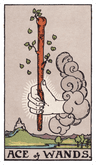
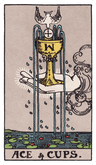
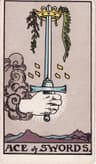
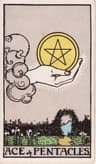
La forma más clara de sentir el tema de un palo es su As, porque un As es el palo destilado a su forma más pura, antes de que algo lo complique. El As de Bastos es impulso puro, la necesidad de hacer o comenzar algo. El As de Copas es un corazón abierto, un sentimiento ofrecido o recibido. El As de Espadas es un pensamiento limpio o una verdad dura que llega de golpe. El As de Oros es una oportunidad tangible, algo con peso que podrías sostener de verdad. Si aprendes los cuatro Ases, has aprendido los cuatro palos; el resto de cada palo es esa semilla encontrándose con el mundo.
Los números son un ritmo
Dentro de un palo, los números te dan una progresión aproximada: los Ases comienzan, los números del medio desarrollan y complican, y los Dieces completan o sobrecargan el tema. No es una fórmula rígida, pero es un patrón real. Un Dos suele ser una elección o un emparejamiento, un Cinco suele ser una pérdida o un conflicto, un Diez suele ser el tema en su plenitud, para bien o para mal. Lee el palo por el tema y el número por la etapa, y podrás hacer un primer intento sensato en cualquier carta Menor que nunca hayas estudiado.
Y las cartas de corte
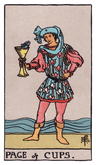
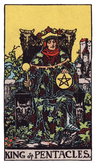
Las cuatro cartas de corte de cada palo funcionan con la misma lógica, un nivel arriba. Donde una carta numerada es un momento en la historia del palo, una carta de corte es una forma de sostener el palo completo: una Paje de Copas es la relación de un principiante con el sentimiento, un Rey de Oros una practicada con lo material y lo sólido. Si las cartas de corte son la parte que encuentras más difícil, como le ocurre a la mayoría, el mismo enfoque basado en el palo las desenreda. Hay un recorrido más completo en la guía sobre leer las cartas de corte.
Leer la mezcla en una tirada
Una vez que conoces los palos, el balance de una tirada completa empieza a hablar. Tres Espadas y una Copa, y la lectura está ocurriendo principalmente en la cabeza con un hilo de sentimiento recorriendo. Solo Oros, y sea lo que fuera lo que sonó la pregunta, en realidad es sobre lo práctico y lo material. Una tirada sin Bastos en ningún lado podría estar señalando exactamente lo que le falta: el impulso para actuar.
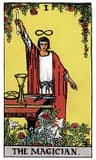
Este es también el lugar donde los Arcanos Mayores se ganan su nombre por contraste. El Mago tradicionalmente se muestra con todos los cuatro símbolos de los palos en la mesa frente a él, lo que es la forma que tiene la imagen de decir que tiene las cuatro capacidades disponibles a la vez. Los Menores son las herramientas individuales; una carta como el Mago es alguien decidiendo cuál alcanzar.
A dónde te lleva esto
No necesitas memorizar 56 definiciones para empezar a leer los Arcanos Menores de manera útil. Necesitas los cuatro temas, la sensación de que los Ases son el tema en semilla y los Dieces son el tema a su máxima expresión, y la disposición a razonar desde la imagen. Aprende los palos primero, y cada carta numerada que encuentres después de eso es una variación que ya puedes medio leer antes de buscarlo.