A daily card is a snapshot. A monthly review is the thing that turns a stack of snapshots into something you can actually learn from. Once a month, you sit down with what you drew and what happened, and you ask the questions that only make sense across weeks rather than days. It takes half an hour, it needs no special skill, and it's where most of the quiet value of a tarot practice actually lives.
Why monthly, and not more often
Patterns need distance to be visible. Inside a week you're too close; every card feels like it's about that day's specifics. Step back to a month and the specifics blur into a shape: a card that kept returning, a mood that ran under everything, a question you circled without landing on. A month is long enough for a shape to form and short enough that you still remember what the entries were about. The card of impartial reckoning here is Judgement, which is less about verdict than about honest review: looking back at what happened and hearing what it's asking of you.
The review isn't about grading the month. It's about noticing what the month was quietly about, which is usually not the thing you thought it was about while you were in it.
The structure, in four passes
Lay out or scroll back through the month's entries, and make four passes. Keep each one short; the point is to notice, not to write an essay.
- What repeated? Which cards, suits, or themes came up more than once. Repetition is the clearest signal you get.
- Where were card and life out of step? The days the card seemed wrong for what was happening. Those mismatches often mark what you were avoiding.
- What did you write around but not say? The thing your sentences kept approaching. You usually feel it before you can name it.
- What would you tell yourself a month ago? The one piece of advice hindsight makes obvious. Write it down for the version of you reading this next month.
Anchor it with one card
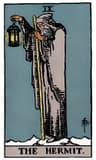
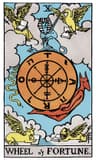
After the four passes, draw one card for the review itself, with a specific question: what am I not seeing about this month? Read it as a lens on everything you just went through, not as a forecast of the next month. Draw The Hermit and the review might be telling you the month asked for a withdrawal you kept postponing. Draw Wheel of Fortune and it might be pointing at how much of the month turned on things you didn't control, and how you met them. The card doesn't summarise the month. It gives you one more angle on a month you've already reviewed honestly.
Keep it honest, not harsh
There's a failure mode worth naming: the review that curdles into self-criticism. Looking back honestly is not the same as grading your own work and finding it wanting. If you notice the four passes turning into a list of what you did badly, stop and change the question from what went wrong to what was true. A month you judge harshly is a month you stop wanting to revisit, and the whole practice depends on your being willing to keep coming back. Honesty here means accuracy, not severity.
Close it, and let it go
End the review with a single sentence naming what the month was about, in your own plain words. Not the cards, the month. Then close the notebook. The temptation is to turn the review into planning, to leap straight from "here's what this month was" into resolutions for the next. Resist it for now. Temperance is the right note to end on: a review done in a measured way, without forcing a conclusion, leaves you with something truer than a to-do list would.
Over a year, these one-sentence summaries become their own small record. Read twelve of them in a row and you get a view of your year that no single month could give you, which is the same reason the daily card is worth keeping. The World and its sense of completion isn't a reward at the end; it's what accumulates when you keep looking back honestly, one month at a time.