The advice you get most often is that a deck should "choose you," which is a lovely idea and no help at all when you're standing in a shop or scrolling a store page with forty options. So here is the plainer version: pick a deck whose pictures you want to look at, in a tradition you can learn from, and start. You can own others later. Almost everyone does.
Art you actually pick up beats art that's correct
A deck lives or dies by whether you reach for it. A gorgeous deck that intimidates you sits in a drawer; a plainer one you like the feel of gets shuffled every morning. Since the whole point is to build a habit of looking, the deck you handle is the right one, even if a purist would raise an eyebrow.
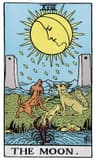
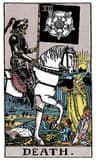
The art isn't decoration, either. Two decks can name the same card and show you very different things. Compare how The Moon looks across decks: in some it's eerie and cold, in others almost gentle, and the feeling the picture gives you is half of what you read from it. The same is true of Death, which one artist draws as a skeleton on a horse and another as a quiet sunrise. You're not just buying 78 cards. You're buying a particular painter's idea of what these moments feel like.
The case for learning on Rider-Waite-Smith
There's one practical reason to start with a Rider-Waite-Smith deck even if a flashier one caught your eye first: nearly every book, article, and course assumes its imagery. Pamela Colman Smith's 1909 drawings put a scene on all 78 cards, including the numbered ones, and that choice became the common language. Learn it, and every other resource opens up. Learn on a deck that reinvents the pictures, and you spend the first months translating.
That doesn't make RWS the deck you have to love. It makes it the deck that teaches you the grammar quickest, so your second deck, the one that reinvents everything, actually makes sense when you get there.
Scenes on every card, or not
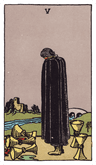
The single feature worth checking before you buy: do the numbered cards show scenes, or just arrangements of the suit symbol? A deck where the Five of Cups is three spilled cups and two standing gives you a story to read. A deck where it's five cups in a row gives you a pattern to memorise. For a first deck, scenes win, because you can reason your way into a picture and you can only recall a definition. Most RWS-style decks have scenes; many older or minimalist decks don't.
If you can look at a card you've never studied and guess what it's about from the picture, it's a good learning deck. If you can't, you are memorising, and memorising is the slow road.
Size, stock, and the boring things that matter
Cards you can't shuffle are cards you won't use. Some decks print oversized, which photographs beautifully and handles like a stack of coasters. If you have smaller hands, a standard or mini size is worth choosing on purpose. Matte cards resist fingerprints; glossy ones stick together when new. None of this is romantic, and all of it decides whether the deck becomes part of your day.
What to ignore
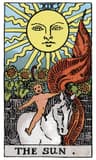
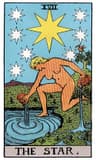
You do not need a deck that matches your "energy," a deck someone gifted you (the old rule that you can't buy your own is a myth), or the most expensive edition. You also don't need to understand a single card before you start. The cards that feel most alive early on tend to be the bright, legible ones like The Sun and The Star, and that's fine. You learn the hard ones by living with them, not by studying up first.
Just pick one
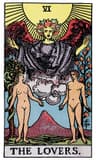
The decision paralysis is the only real obstacle here, and it's worth naming: there is no wrong first deck, only a deck you never open. Choose the one whose The Lovers you'd hang on a wall, make sure the numbered cards have scenes, and order it. The second deck is a much easier decision, because by then you know what you wish the first one did differently.