Let's take the objection seriously first, because it's correct. The cards don't know anything about you. There is no mechanism by which a shuffled deck could know about your job, and anyone selling you one is selling you something. If that's where you are, you're not being cynical. You're being right.
Here's the part that survives the objection.
The actual mechanism
A blank page asks you nothing. That's the problem with journaling: on the days you most need it, you write around the thing. You produce three paragraphs about your week and somehow never mention the conversation you've been replaying since Tuesday. The page lets you, because the page has no opinion.
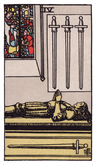
A card is a constraint. It arrives with a few hundred years of argument attached and it asks something specific. Here is the whole trick: you didn't choose it. You can't route around a question you didn't pick. Draw Four of Swords and you have to say something about rest, even if you'd rather write about the conversation. Ten minutes later you're writing about why you can't stop replaying it, which is where you were headed anyway and would not have got to alone.
The card doesn't know anything. It just isn't you, and that turns out to be enough.
You already accept this everywhere else. A good interviewer asks a question you wouldn't have asked yourself. A therapist's "what did that bring up?" isn't magic either — it's an interruption in a pattern you can't interrupt from inside. Randomness is a cheap way to buy that same interruption at eleven at night when nobody else is awake.
What you don't have to believe
- That the shuffle is guided. It isn't.
- That the card refers to your situation. It doesn't — you do the referring, and that's the work.
- That the traditional meaning is correct. Treat it as one reader's strong opinion. Disagreeing with it in writing is often the most productive ten minutes available.
What's left is a prompt generator with unusually good prompts, which is a genuinely useful thing to own. If you want the guided version of exactly that, the Reflection Room reads your card and asks the questions for you.
How to actually do it
Draw one card. Read the meaning once, then put it down — don't study it, you're not being tested. Write for ten minutes starting from one question: where does this apply, and where does it obviously not? The second half matters. "This has nothing to do with my week" is a sentence that reliably continues "…except", and the except is the entry.
Cards like The Hermit and The High Priestess are hard for skeptics because their traditional readings lean on inner knowing, which sounds like woo. Read them as questions about attention instead: what are you not saying, and who benefits from that? Seven of Cups stops being about illusion and starts being about having too many tabs open.
The thing that will actually convince you
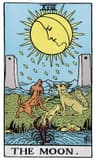
Not one reading. One reading is a coincidence, and saying so is the correct response. Keep entries for three months. What's persuasive isn't any single card; it's opening The Moon for the fourth time since April and finding you wrote almost the same paragraph each time, about a thing you'd have sworn you were over. The deck didn't know that. You did, four times, and the record is what makes it undeniable.
That's not a mystical claim. It's just what happens when you write things down and keep them.